
- Iran, a sanctioned middle power, reached tens of millions of Americans on US platforms in three days using tools that did not exist eighteen months ago, collapsing the cost of wartime influence and persuasion by an order of magnitude.
- Conventional soft power indices put the US first and do not rate Iran at all; capability-based measurement of strategic communications and information operations puts the US in a lower tier, behind China and a cluster of small, focused middle powers.
- Strategic communications now rests on four independently developed sub-capacities; production, coordination, distribution and adaptation - and the mations winning the contest are no longer those with the biggest broadcasters.
On the evening of 10 March 2026, eleven days into the Middle East war that had begun with the assassination of Ayatollah Ali Khamenei in a joint US–Israeli strike, Tasnim News Agency posted a two-minute video titled Narration of Victory to Telegram. It carried the watermark of the Revayat-e Fath Institute, a state media foundation linked to the Islamic Revolutionary Guard Corps. The video had no dialogue. A Lego figurine of Donald Trump, flanked by a Lego Benjamin Netanyahu and a Lego devil, leafed through an album labelled Epstein File, pressed a red button, and sent a missile into a classroom of toy schoolgirls in pink headscarves, a reference to the strike on the elementary school in Minab in which 175 schoolgirls and staff were reported killed on the first day of the war.

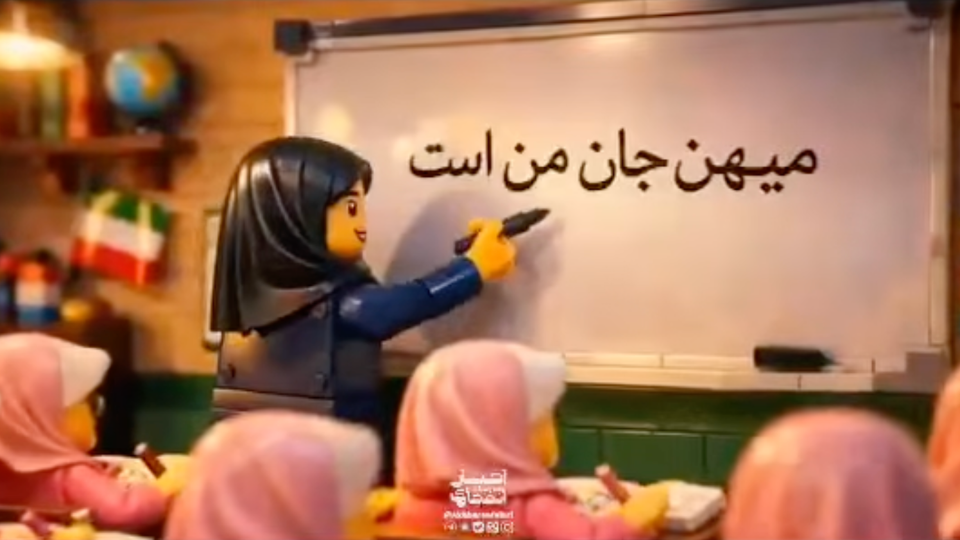
Within three days the clip had been viewed tens of millions of times. A generation earlier, wartime strategic communications meant Voice of America, BBC World Service and leaflet drops. The Iran Lego videos used none of it. They were produced by small teams using generative AI tools, distributed through platforms operated from California, and carried to American audiences by the algorithms of those same platforms. This is what contemporary information operations looks like.
In the brief
Measuring Strategic Communications & Information Operations Capability
Case Study: The Iran Lego Campaign
The Four Sub-Capacities of Strategic Communications Capability
Formats and Channels in Historical Perspective
Forward Looking Dynamics
Measuring Strategic Communications & Information Operations Capability
Every nation now operates in an information environment where perception is contested continuously, not episodically. The ability to produce, coordinate, distribute and adapt strategic messaging at scale has become as much a marker of national power as economic output or military reach and arguably a more efficient one, given that global spending on nation-brand communications is roughly one two-thousandth of spending on hard power. Measuring that capability matters. This section reviews the established indices and sets out GINC's emerging ratings alongside them.
Established Indices
Ben Nimmo’s Breakout Scale, developed at Brookings in 2020, categorises influence operations on a six-point scale based on how far they travel. It measures individual operations rather than national capability, but provides the cleanest proxy for distribution reach. The Carnegie Endowment Partnership for Countering Influence Operations has reviewed the empirical literature and explicitly noted that research has been overwhelmingly Russia-focused, with more than twenty other states possessing comparable capability that has not been systematically measured. Iran was named in Carnegie’s gap analysis — a point the March 2026 campaign has now made concrete. The Doublethink Lab China Index, Meta’s adversarial threat reports and case work from the Atlantic Council DFRLab, Stanford Internet Observatory and Citizen Lab round out the research landscape.
Brand Finance Global Soft Power Index is the dominant perception-based instrument in the field, surveying 170,000 respondents across 100-plus markets and structuring findings around eight pillars, one of which is Media and Communications. The 2026 edition ranks the United States first on the pillar, with China second. Brand Finance has also observed that combined nation-brand spending on communications globally is under $1 billion versus $2.2 trillion on hard power, an order-of-magnitude disparity relative to the capability’s strategic importance. The Portland Soft Power 30, the original Joseph Nye-endorsed instrument, ran annually from 2015 until 2019 and included a Digital sub-pillar.
GINC's National Capability Ratings
Strategic Communications and Information Operations is one of the capabilities measured in GINC's National Capability Framework, which rates states on demonstrated ability to produce, coordinate, distribute and adapt messaging at scale rather than on perception outcomes or legacy broadcasting reach. The emerging ratings tell a markedly different story from Brand Finance and the Portland Soft Power 30. China, the UAE and Singapore lead the field in the BBB band, a grouping that already departs sharply from the conventional indices. A broad middle tier in BB contains Israel, Estonia, Russia, South Korea, Qatar, the Netherlands and Norway, rewarding coherence and coordination over scale. Ukraine, the United Kingdom, Denmark, the United States and Sweden fall to the B band, well behind the perception-based instruments that capture decades of accumulated American and British cultural reach. Iran enters the rated set at C, a placement that reflects the constraints of its traditional broadcasting infrastructure but understates what the March 2026 campaign has now demonstrated.
Figure 1. Top 15 (and Iran) Strategic Communications National Capability Ratings
| Nation | Score | Rating | Outlook |
|---|---|---|---|
| Frontier (AAA, AA, A) | |||
| 0 countries | |||
| Advanced (BBB, BB, B) | |||
| BBB | |||
| 🇨🇳 China | 17 | BBB | Stable |
| 🇸🇬 Singapore | 17 | BBB | Stable |
| 🇦🇪 UAE | 17 | BBB | Upgrade |
| BB | |||
| 🇪🇪 Estonia | 16 | BB | Upgrade |
| 🇮🇱 Israel | 16 | BB | Stable |
| 🇳🇱 Netherlands | 16 | BB | Stable |
| 🇳🇴 Norway | 16 | BB | Stable |
| 🇶🇦 Qatar | 16 | BB | Upgrade |
| 🇷🇺 Russia | 16 | BB | Stable |
| 🇰🇷 South Korea | 16 | BB | Upgrade |
| B | |||
| 🇩🇰 Denmark | 15 | B | Stable |
| 🇸🇪 Sweden | 15 | B | Stable |
| 🇺🇦 Ukraine | 15 | B | Stable |
| 🇬🇧 United Kingdom | 15 | B | Stable |
| 🇺🇸 United States | 15 | B | Downgrade |
| Developer (CCC, CC, C) | |||
| CCC | |||
| 16 countries | |||
| CC | |||
| 19 countries | |||
| C | |||
| 🇮🇷 Iran | 12 | C | Upgrade |
| 21 further countries | |||
| Intermediate (DDD, DD, D) | |||
| DDD | |||
| 54 countries | |||
| DD | |||
| 47 countries | |||
| D | |||
| 25 countries | |||
| Foundation (EEE, EE, E) | |||
| EEE | |||
| 17 countries | |||
| EE | |||
| 1 country | |||
| E | |||
| 0 countries | |||
| Emerging (FFF, FF, F) | |||
| 0 countries | |||
| Planning (SP, SP, NP) | |||
| 0 countries | |||
Select Country Profiles
The profiles below set out the institutional base and outlook for each of the 16 nations listed in the table above. Outlook calls, upgrade, downgrade or stable, reflect the likely direction of travel over the next three to five years.
🇨🇳 China (BBB, Stable). The largest state broadcasting infrastructure in the world through CGTN, Xinhua and related outlets, supplemented by Wolf Warrior diplomatic accounts and MCN-style influencer programmes. Brand Finance ranks China second globally on Media and Communications. The persistent vulnerability is adaptation: output often reads as tonally mismatched to Western audiences. Outlook stable: at the ceiling of the current framework, with adaptation the binding constraint on further upgrade.
🇦🇪 UAE (BBB, Upgrade). Sustained sovereign investment in international broadcasting through the National Media Council and outlets including The National and Sky News Arabia, paired with one of the most aggressive sports diplomacy and cultural-soft-power programmes of any middle power. Active across all four attribution modes and an early adopter of generative AI in state communications. Outlook upgrade: investment trajectory and institutional coherence point toward A within the window.
🇸🇬 Singapore (BBB, Stable). A small state with disproportionate capability, anchored by the Ministry of Communications and Information, a tightly coordinated whole-of-government messaging apparatus and high distribution fluency in English and regional languages. The model is coherence and discipline rather than scale. Outlook stable: capability is mature and the framework rewards what Singapore already does well.
🇮🇱 Israel (BB, Stable). Sophisticated production and coordination capacity through the Government Press Office, IDF Spokesperson's Unit and Ministry of Foreign Affairs digital diplomacy operation. Israeli strategic communications during the 2023–present conflicts have attracted significant analysis and criticism, with questions about the effectiveness of distribution and adaptation relative to adversary narratives. Outlook stable: strong institutional base offset by adaptation pressure in contested information environments.
🇷🇺 Russia (BB, Stable). Pioneered the distributed attribution architecture through RT, Sputnik, the Internet Research Agency and affiliated ecosystems. High production capacity, sophisticated coordination across all four attribution modes, well-developed distribution on Telegram and X. Adaptation has struggled in some Western audiences because of tonal mismatches. Outlook stable: capability is well-established but adaptation constraints cap further progress.
🇰🇷 South Korea (BB, Upgrade). Strategic communications capability built on the back of one of the most successful cultural-export programmes of the past two decades, with the Korean Culture and Information Service coordinating across film, music and digital media. Increasingly active on regional security messaging. Outlook upgrade: cultural reach is converting into deliberate state communications capability.
🇶🇦 Qatar (BB, Upgrade). The Al Jazeera Media Network remains one of the most influential non-Western broadcasters globally, with Arabic and English operations reaching audiences that Western state media struggles to access. Paired with sustained sports and cultural diplomacy. Outlook upgrade: broadcast reach and digital investment trajectory point upward.
🇺🇦 Ukraine (B, Stable). The most sustained wartime strategic communications operation of the past decade. Since February 2022 Ukrainian government and civil society communications have mobilised Western support with remarkable consistency. High production capacity distributed across official accounts, ministries and a wide ecosystem of sympathetic creators; tight coordination; high distribution fluency; unusually agile adaptation, including strategic use of humour and pop-culture reference. Outlook stable: rating already reflects the wartime operation; trajectory depends on how the war resolves.
🇺🇸 United States (B, Downgrade). Top-ranked on the Brand Finance Media and Communications pillar. Production capacity is enormous and institutionally deep; coordination is comparatively restrained, with constitutional and legal limits on ambiguous and false attribution modes against domestic audiences. White House meme output during the March 2026 war reached approximately 100 million impressions across four videos, and officials defended it as effective at connecting with younger audiences, though the tonal register was contested. Outlook downgrade (soft): institutional restraint, fragmentation of the federal communications apparatus and contested tonal register point to continued slippage on a capability-based instrument even as perception holds.
🇮🇷 Iran (C, Upgrade). The subject of this case. Traditional international broadcasting infrastructure is constrained relative to major competitors, operating under sanctions pressure with limited English-language reach. The March 2026 campaign demonstrated production, coordination and distribution capabilities that reached American audiences at a scale the traditional inputs would not have predicted. Outlook upgrade: the C rating reflects legacy inputs; any serious re-rating cycle should move Iran into BB within 12–24 months on the basis of demonstrated capability.
Case Study: The Iran Lego Campaign
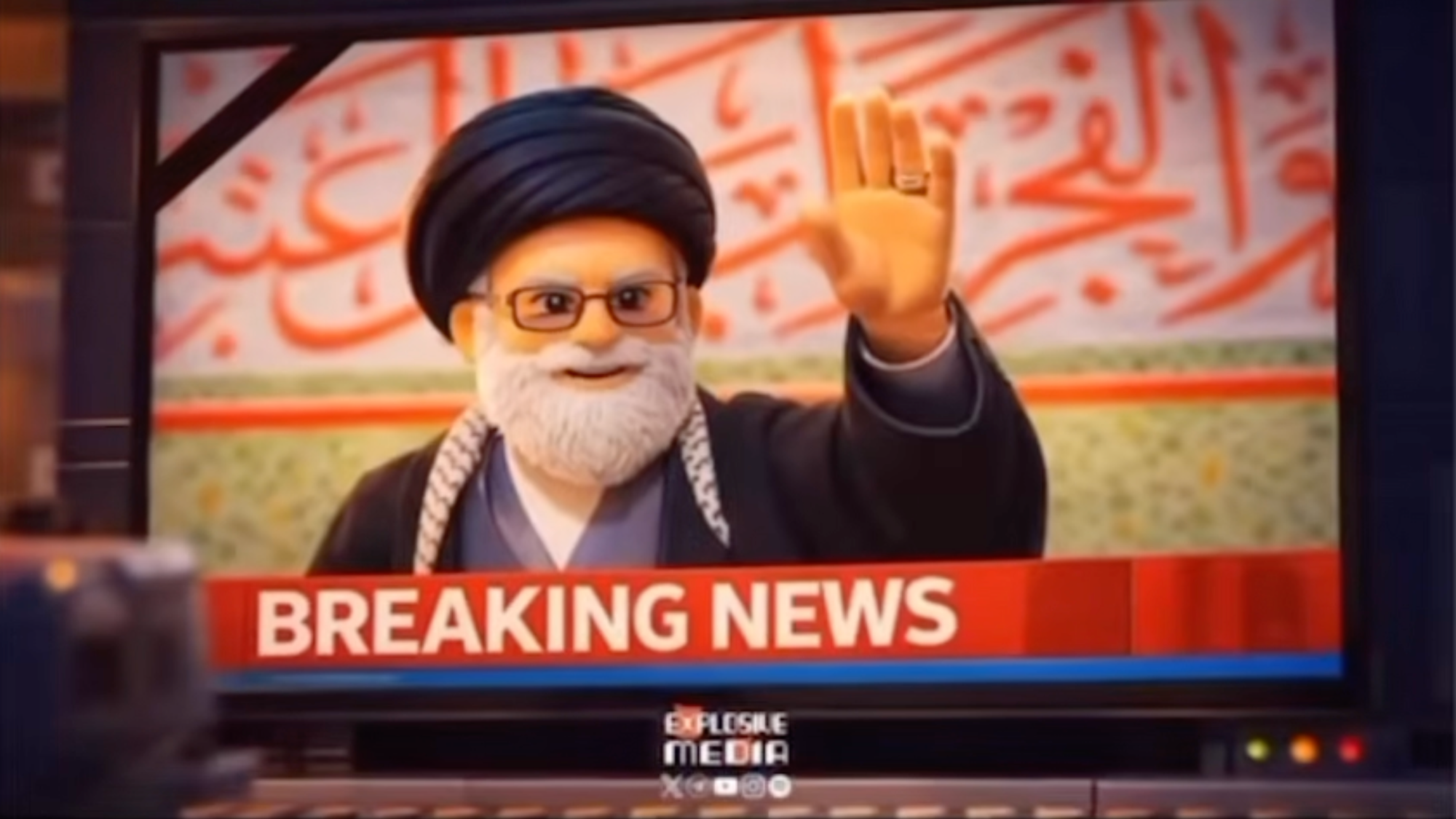
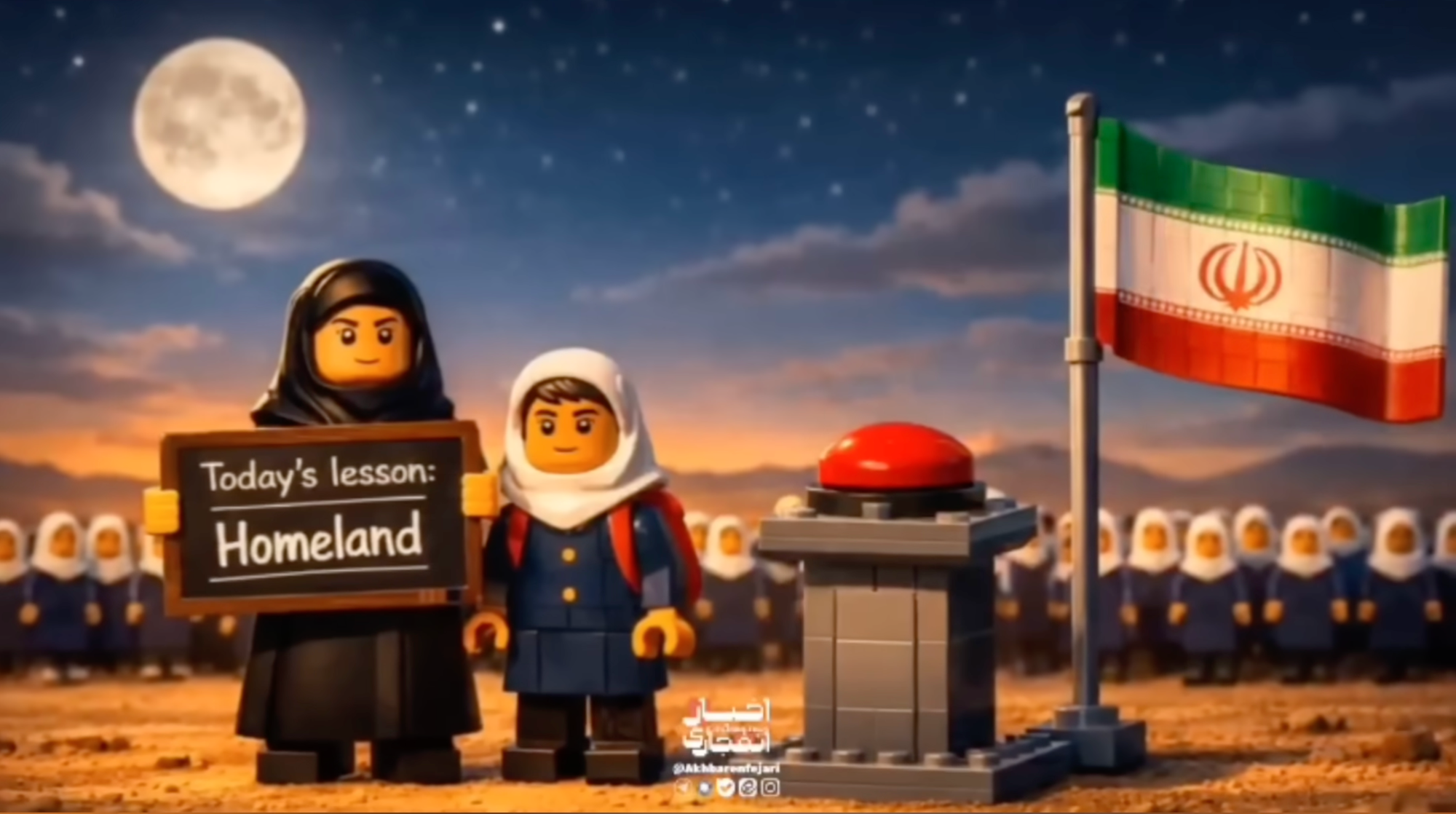
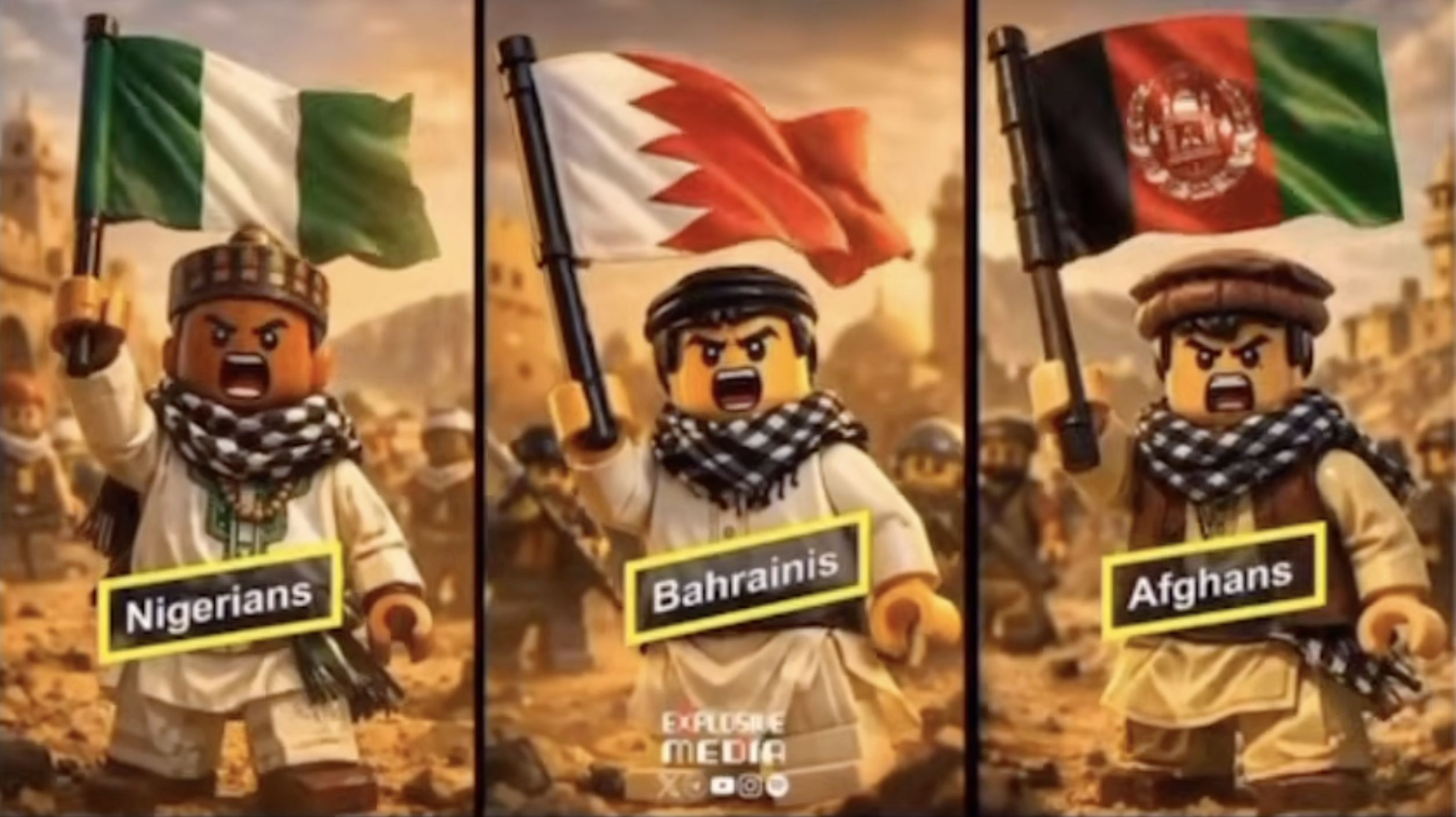
The Lego videos were not a single piece of content but a sustained series of releases across multiple channels of attribution. The campaign has been covered by Reuters, AFP, the Associated Press, NPR, CNBC, TIME, The New Yorker, The Times of Israel, France 24, The Jerusalem Post, The Daily Beast, The New Republic and Wikipedia, among others. The New Republic has described the series as ‘slopaganda’ and reports it is sometimes referred to collectively as ‘Operation Epstein Fury’, a riff on Trump’s own ‘Operation Epic Fury’ framing of the war. The New Yorker has corresponded directly with the Explosive Media group by email, eliciting claims of student-run independence that the magazine has been unable to verify.
News coverage does not provide an exhaustive catalogue and most videos have no formal titles. The table below summarises those specifically described in mainstream reporting as at April 9, 2026, the time this note was published and will be updated each week as we catalogue the main outputs.
Figure 2. Explosive Media primary output during the 2026 Iran War, March–April 2026.
| Video | Estimated release |
|---|---|
| Narration of Victory (Persian: Revayat-e Fath) The flagship two-minute video. Lego Trump, Netanyahu and a devil figure leaf through an 'Epstein File' before launching a strike on a Lego classroom of schoolgirls in Minab. Continues through Iranian retaliation across US bases in Bahrain, Erbil and Riyadh, Israeli flags cowering, Netanyahu fleeing through a tunnel, the closing of the Strait of Hormuz, and ends with falling blocks forming the letters L-O-S-E-R. |
10–11 March 2026 |
| Trump Last Gamble Named in The Humanity Archive's chronological account of the Explosive Media catalogue. Description not detailed in available coverage. |
Mid-March 2026 |
| Teletubby video A plastic Trump in an American flag onesie playing with toy fighter jets over a map of the Middle East. |
Mid-March 2026 |
| One Vengeance for All (original) A 53–54 second AI-generated montage (not Lego in the original cut) treating the war as historical justice: Native American dispossession, Hiroshima, Vietnam, Yemen, Afghanistan, Iraq, Gaza, with a missile striking the Statue of Liberty whose head has been replaced by Baal. |
Late March 2026 |
| One Vengeance for All (revised, Lego cut) The revised version, produced after audience feedback in the comments noted the absence of Black American history. Adds enslaved Africans, Malcolm X, Abu Ghraib, Iran Air Flight 655 and Rachel Corrie. Re-rendered in Lego style. |
Late March 2026 |
| L.O.S.E.R. A separate rap diss track, distinct from the L-O-S-E-R sequence at the end of Narration of Victory. Calls Trump a 'loser' and Netanyahu's 'puppet' over images of stock market sell-offs, missile strikes, coffins and a MAGA crowd protesting outside the White House with 'L.O.S.E.R.' placards. |
Late March 2026 |
| Come Closer Follow-up taunt aimed at Trump over threats of US ground action. 'No more words needed, LOSER!' |
Late March / early April 2026 |
| 'Tabas II' response Response to the failed US rescue operation, showing a Lego Trump with a bandaged hand raging down the phone as US rescue aircraft are shot down. |
c. 5–6 April 2026 |


Attribution and Provenance
The attribution picture is genuinely mixed, and that mixing is itself characteristic of contemporary information environments. At the overt end sits the Revayat-e Fath Institute, watermarked on the 10 March video and documented as linked to the IRGC. In the affiliated middle sits Tasnim News Agency and the Islamic Republic of Iran Broadcasting (IRIB), which carried the videos with explicit institutional endorsement. At the ambiguous edge sits Explosive Media (Akhbar Enfejari), which describes itself as an ‘Iranian Lego-style animation team’ and, according to The New Republic, is ‘an anonymous student activist group’ producing the strongest entries in the series. The New Yorker obtained direct email correspondence in which the group asserted student-run independence from state institutions; the magazine could not verify the claim. Shorter, less polished videos in the same style are reportedly fan-made.
It is entirely possible that Explosive Media is what it says it is: a sympathetic student collective producing pro-regime content without direct state direction. It is also possible that it is a state-aligned operation using the language of grassroots independence for plausible deniability. Western reporting has not definitively established which, and the group’s own responses to journalists have been evasive when asked directly about regime ties. Either reading is consistent with the observable evidence. Both readings are equally important for the framework, because the ambiguity itself, a genuinely organic sympathetic producer being amplified by state media, and a state-directed operation posturing as grassroots, are now operationally indistinguishable from the outside, is a feature of contemporary strategic communications, not a bug in the analysis. Generative AI tools and decentralised platforms have made it possible for small groups to produce state-broadcast-quality content and for state operations to look convincingly like small groups. The framework has to accommodate both.
Production and Distribution
The March 2026 videos marked a visible step forward from earlier IRIB output, which had relied on crude stop-motion or low-fidelity CGI. The new videos were built frame-by-frame with generative AI tools that produced consistent toy aesthetics, micro-expressions on plastic figures and fully synthetic environments. Production cycles were measurable in days rather than weeks (bne IntelliNews). Emerson Brooking of the Atlantic Council DFRLab observed that the campaign was allowing Iranian content to reach American audiences in ways earlier state media output had not, describing the broader phenomenon as ‘the commodification of war’. The videos reached tens of millions of views across Telegram, X, TikTok and Instagram, with engagement patterns suggesting organic redistribution. The SNL cold open parodied the campaign; Kentucky Congressman Thomas Massie referenced it in Congress. The Breakout Scale category, if formally assessed, would be at the upper end.
The Four Sub-Capacities of Strategic Communications Capability
The Lego case illustrates that contemporary strategic communications and information operations decomposes into four distinct sub-capacities, each of which can be developed independently.
Production is the operation of a generative pipeline at sustained scale. Generative AI has collapsed the cost curve by at least an order of magnitude relative to traditional studio workflows, with strong cross-dependency on Hard Capability infrastructure, AI tools, compute, data centres and cloud platforms now become genuine inputs to soft power projection.
Coordination is the maintenance of narrative coherence across a distributed attribution architecture. Contemporary state communications rarely runs through a single voice. It runs through four attribution modes: overt (BBC, VOA, CGTN), affiliated (Tasnim, Sputnik), ambiguous (Explosive Media, creator networks), and false (operations designed to look like they come from the adversary). Different states operate different characteristic profiles across these modes.
Distribution is fluency in the operating logics of contemporary platforms, algorithmic ranking, format conventions, moderation thresholds and cross-platform amplification. The Lego videos travelled in part because the toy aesthetic read as children’s content to moderation systems, and because the dialogue-free design lowered language barriers.
Adaptation is aesthetic and format agility, the ability to inhabit the right cultural vernacular for the right audience. The Iran campaign deployed children’s-toy aesthetics, animated film parody, rap, English-language deadpan and public artwork in a single coordinated output. As propaganda scholar Nancy Snow told CNBC, the contemporary information contest is ‘not just a war of weapons, but a war of aesthetics’.
Formats and Channels in Historical Perspective
Information operations in war are as old as war itself. Leaflet drops, shortwave radio, airborne loudspeakers, defector testimonials, forged documents and rumour campaigns have all been standard instruments of wartime communication for most of the twentieth century. What has changed is not the impulse to shape perception during conflict but the formats and channels through which the shaping now travels.
Short-form video on TikTok, Instagram Reels, YouTube Shorts and the video features on X and Telegram has become the dominant wartime format. Telegram has become the central infrastructure for state-affiliated and ambiguous communications, combining minimal moderation, channel-based distribution and cross-border availability. Generative AI media has moved from experimental to operational in the past eighteen months. Encrypted messaging on WhatsApp, Signal and Discord carries significant volumes inside adversary information environments. Traditional broadcast (VOA, BBC World Service, CGTN, RT) remains important but declining in relative weight. Leaflet drops, shortwave and covert physical instruments retain niche roles but have been displaced by digital equivalents. The underlying shift is from slow, high-cost, institutionally concentrated formats to fast, low-cost, algorithmically distributed ones.
Forward-Looking Dynamics
The March 2026 Iran campaign is best read not as an endpoint but as an early signal. The combination of generative AI, fragmenting platforms and deliberately ambiguous attribution architectures is opening a new wave of strategic communications in which deepfakes become operational, the line between state and citizen producer dissolves, and verifying who made what, and for whom, becomes structurally harder. Five dynamics will shape the next three to five years.
1. Generative AI will keep collapsing the cost curve, and synthetic media will become a deception instrument. The Iran Lego videos are openly stylised synthetic content. The next frontier is synthetic media designed to deceive, deepfake video of adversary leaders, fabricated atrocity footage, AI-generated voice clones delivering fake orders or statements. The countermeasures are different, but the underlying production capability is the same.
2. Platform fragmentation will complicate moderation and measurement. The post-Twitter fragmentation across Bluesky, Mastodon, Threads, Truth Social, RedNote, Telegram and Discord is creating an environment in which attribution and audience measurement are both harder. Ambiguous and false attribution modes gain from fragmentation.
3. Attribution architectures will become more sophisticated. The Iran case illustrates the direction: overt state media at one end, affiliated outlets in the middle, ambiguous collectives and influencer networks at the deniable edge, with false-attribution operations designed to impersonate adversary sources as an active and growing mode. Democratic states face uncomfortable choices because some of these architectures sit in tension with domestic transparency norms.
4. The state and non-state boundary will continue to blur. The Explosive Media question, genuinely independent student collective, state-run front, or something in between, is not unique to Iran. Comparable ambiguity surrounds pro-Russian creator networks, pro-Chinese influencer programmes, pro-Ukrainian citizen journalists and meme-producing political accounts in every major democracy. The framework has to treat the ambiguity as a feature, not as a measurement failure.
5. Perception-based measurement will lag capability. Brand Finance and legacy indices measure perception outcomes with survey lags of twelve to twenty-four months. The capabilities that produced the March 2026 Iran campaign will not register in perception indices until 2027 or 2028. The existing soft power rankings will systematically underestimate rising communications powers and overestimate declining ones.
In 2003, coordinated communications across the US, UK and allied governments convinced Western publics of a contested case for war in Iraq, anchored by a dossier, a United Nations presentation and a tightly managed press cycle across traditional broadcasters and newspapers. In 2016, Russian Internet Research Agency operations targeting the US presidential election marked the moment platform-based state-affiliated influence operations became a mainstream public concern. In 2026, a two-minute AI-generated Lego animation, possibly produced by a student collective, possibly produced by a state, possibly something in between, reached tens of millions of American viewers on American platforms, was parodied on SNL, and forced analysts at the Atlantic Council, Brookings and Carnegie to reconsider how they measure the capabilities of states that do not appear near the top of the conventional rankings.
Each of these moments represents a different capability paradigm. The 2003 model was slow, expensive, institutionally concentrated and attributable. The 2016 model was faster, cheaper, platform-native and partially deniable. The 2026 model is near-instant, near-free, algorithmically distributed and attribution-ambiguous by design. The entry cost has fallen. The potential reach has risen. The gap between what the existing instruments capture and what the capability actually looks like has widened. Closing that gap is the work the national capability framework now needs to do.


