Triads. The Quiet Power Geometry of the 21st Century
How three-country alliances are quietly reshaping global power, strategy, and the future of international cooperation.

- Triads are rising as agile, powerful mini-alliances that sit between bilateral ties and large multilateral institutions.
- They enhance strategic depth, resilience, and coordination, especially in security, economics, and Global South cooperation.
- Twelve major triads—from AUKUS to IBSA—now shape regional and global order, each with distinct roles in balancing, deterrence, supply chains, or governance.
Global geopolitics is increasingly defined not just by bilateral alliances or sprawling multilateral institutions, but by a middle form: trilateral groups, or triads. These three-country arrangements sit at a strategic sweet spot, small enough to act quickly and decisively, yet large enough to command regional or global influence. They provide flexibility where large institutions are too slow, and strategic depth where bilateral ties alone are too narrow.
Moving from two countries to three fundamentally changes the nature of strategic interaction. In a dyad, cooperation is exclusive and often fragile. In a triad, pivots emerge, coalitions shift, and the risk of dominance by any single actor is diffused. Game theory has long shown that three-player structures generate more resilience and more strategic options: one state can mediate between the other two, two can balance the third, or all three can cooperate on different issue domains. At the same time, triads can be inherently unstable, vulnerable to two-against-one dynamics, weak bilateral links, or competing priorities.
Yet despite their complexities, triads have become essential tools of statecraft in an era marked by multipolarity, technological rivalry, and supply-chain interdependence. From hard-security alliances to economic blocs and Global South coalitions, trilateralism is quietly shaping the geopolitical architecture of the 2020s. The following case studies provide a concise map of the 12 most strategically significant triads today.
AUKUS. 🇺🇸 United States 🇬🇧 United Kingdom 🇦🇺 Australia
Hard Security and Advanced Tech
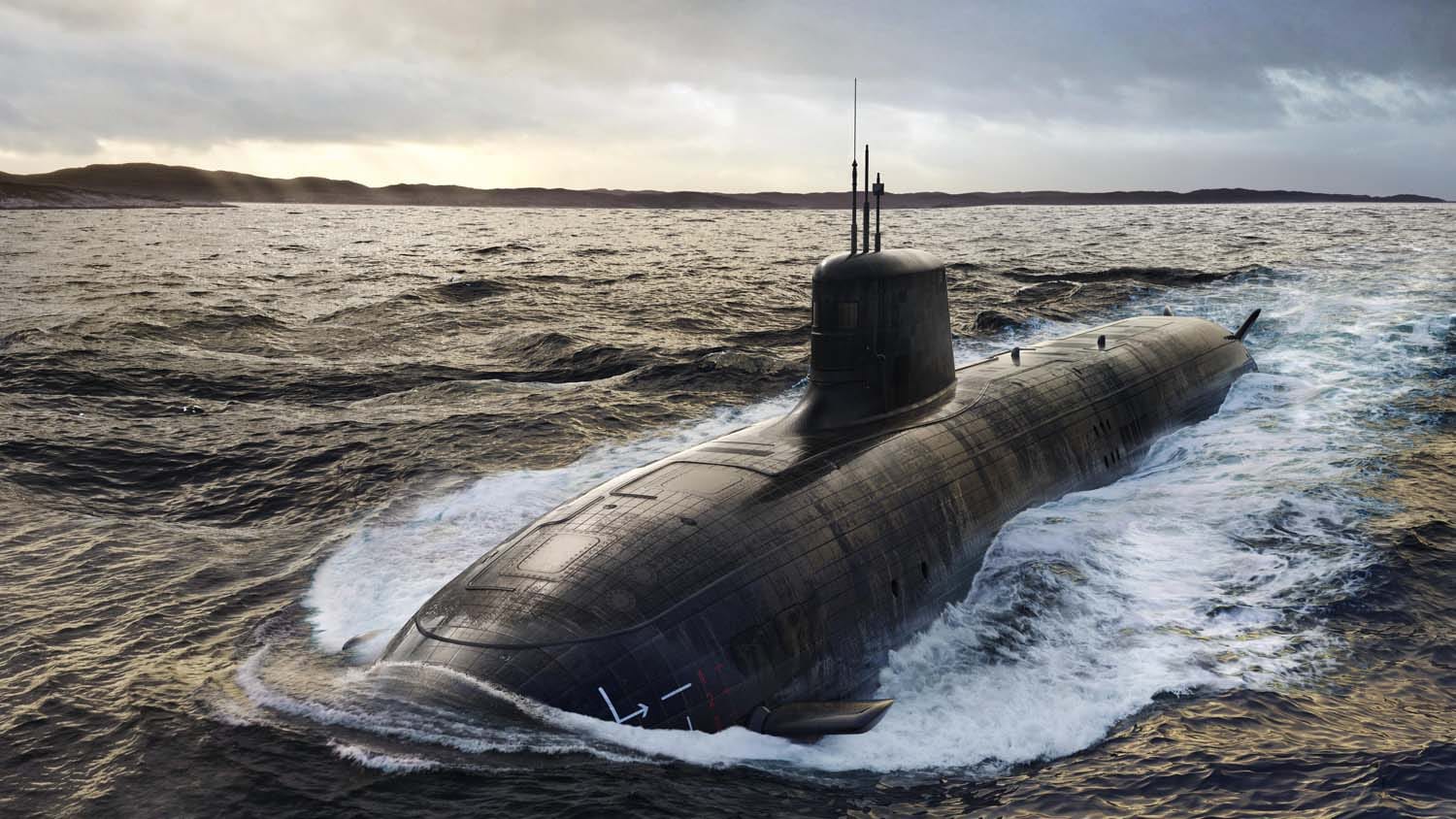
AUKUS emerged in 2021 as a transformative Indo-Pacific security partnership, drawing together three states already linked by deep historical and intelligence ties. The centrepiece, the transfer of nuclear-powered submarine technology to Australia, anchors the deal in a 50-year horizon, effectively binding Canberra, London, and Washington into a shared defence-industrial future. It also represents a major shift in U.S. technology-sharing policy, expanding cooperation beyond submarines to AI, quantum systems, undersea warfare, and long-range strike.
Today AUKUS is the Indo-Pacific’s most consequential mini-lateral security initiative. It strengthens deterrence against China, reinforces alliance interoperability, and synchronises high-end industrial development. Although some political debates continue in each member country, the structural investments already underway make AUKUS exceptionally durable. Its long-term outlook is strong: the partnership is evolving into a multi-domain capability ecosystem that will shape the region’s military balance for decades.
Camp David Trilateral Pact. 🇺🇸 United States 🇯🇵 Japan 🇰🇷 South Korea
Northeast Asia Security and Missile Defence
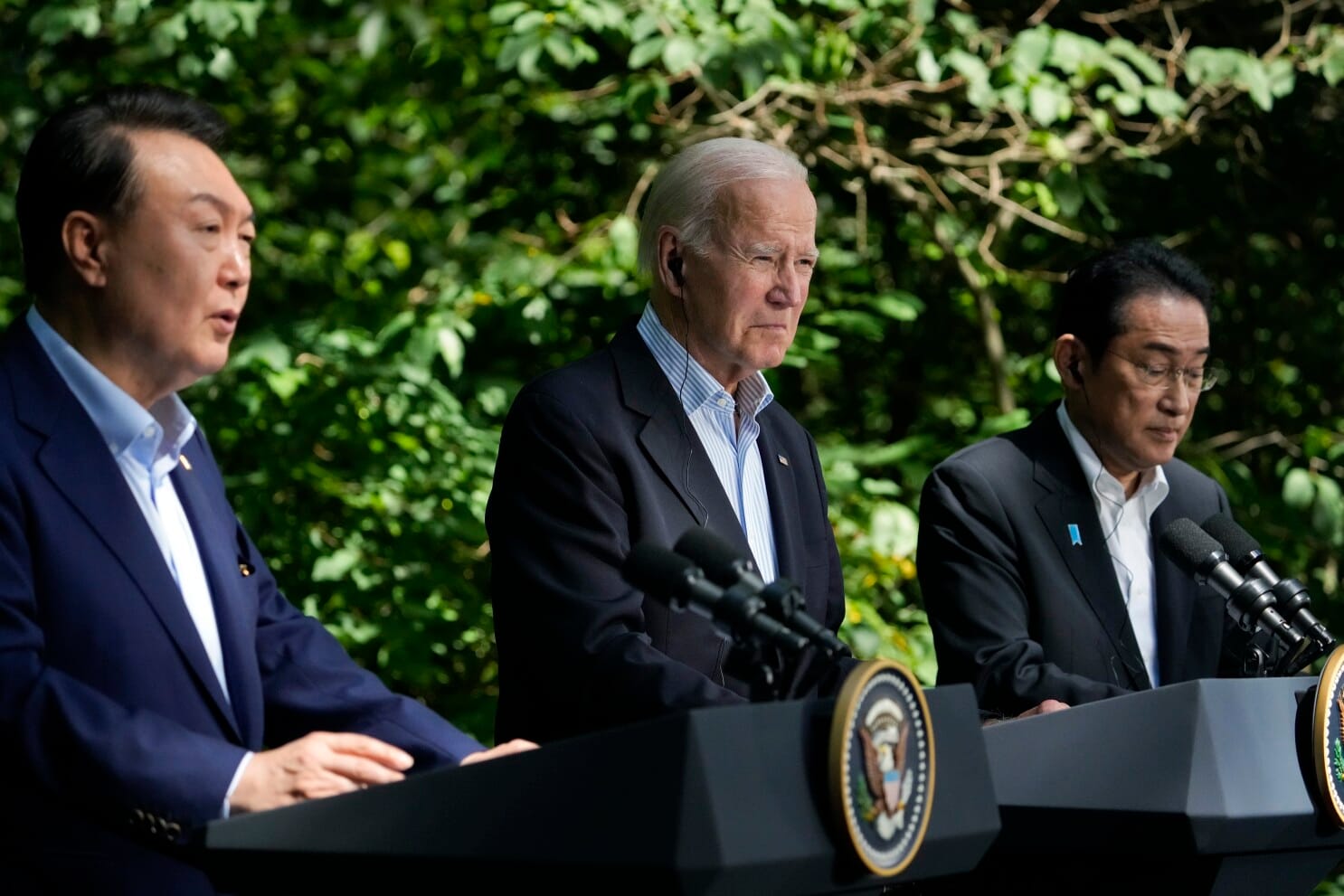
The 2023 Camp David summit marked a historic upgrade of relations among the United States, Japan, and South Korea, three allies long aligned with Washington but often hampered by their own bilateral grievances. The summit institutionalised annual leader-level meetings, missile-defence cooperation, contingency planning, and a commitment that threats to one partner concern all three. It created a durable scaffolding for trilateral policymaking, explicitly focused on deterring North Korea and implicitly addressing strategic competition with China.
The Camp David framework is now one of the fastest-consolidating security structures in Asia. Regular ministerial engagements, expanded intelligence sharing, and trilateral exercises have become routine. Its future, however, is partially conditioned by domestic politics in Seoul and Tokyo; shifts in leadership could soften or strengthen commitments. Even so, structural forces, North Korean missile expansion and China’s assertiveness, ensure that this triad will remain central to Northeast Asian security.
Pre Quad. 🇺🇸 United States 🇯🇵 Japan 🇦🇺 Australia
Indo-Pacific security & “Free and Open Indo-Pacific”
For nearly two decades, the United States, Japan, and Australia have cultivated a close strategic partnership anchored by the Trilateral Strategic Dialogue. This triad coordinates defence posture, Pacific Island engagement, infrastructure financing, intelligence cooperation, and maritime security. It has quietly served as the operational backbone of what later became the Quad, long before that grouping rose to prominence.
Today this triad shapes the Indo-Pacific’s military and diplomatic architecture. The three militaries train extensively together and share a common vision of a rules-based maritime order. Their collaboration on infrastructure and development also offers an alternative to China’s Belt and Road Initiative. The outlook is strong: as Japan and Australia expand defence budgets and modernise their forces, trilateral cooperation will only deepen, reinforcing the U.S. regional presence amid intensifying strategic rivalry.
JAI. 🇺🇸 United States 🇮🇳 India 🇯🇵 Japan
Balancing China and Sea-lane Security
The JAI triad, formally launched as a leaders’ meeting in 2018, brings together a U.S. ally (Japan), a close U.S. partner (India), and two of Asia’s top naval powers. The grouping focuses on maritime domain awareness, resilient supply chains, infrastructure standards, and Indo-Pacific strategy. India plays a pivotal role: as the only member not bound by a formal alliance with Washington, its participation lends credibility to a broader democratic, multi-aligned Indo-Pacific vision.
JAI is most active at sea. The Malabar naval exercises, involving all three nations, demonstrate operational alignment across the Indian Ocean and Western Pacific. Yet India’s commitment is nuanced, it balances cooperation with a desire for strategic autonomy. As long as China’s behaviour remains assertive, the incentives for trilateral alignment remain strong. JAI is likely to remain flexible and interest-driven rather than treaty-like, but its strategic importance is rising.
USMCA / NAFTA Successor. 🇺🇸 United States 🇨🇦 Canada 🇲🇽 Mexico
Deep Economic Integration and Supply Chains
USMCA, implemented in 2020, modernised the original NAFTA framework and cemented one of the world’s largest economic spaces, representing around US$31 trillion in combined GDP. This triad underpins deeply integrated supply chains across autos, agriculture, aerospace, energy, and digital services. North America’s production ecosystem is now so interwoven that shocks in one member immediately propagate across the other two.
Today the triad is at the heart of regional re-shoring and industrial-policy competition with China. The shift toward secure, near-shored supply chains has accelerated U.S.–Canada–Mexico economic coordination. While occasional trade disputes persist, the overall trajectory is one of deeper integration. The outlook is robust: North America will continue consolidating as a unified economic platform for advanced manufacturing, critical minerals, and clean-energy industries.
P3. 🇺🇸 United States 🇬🇧 United Kingdom 🇫🇷 France
Nuclear and UN Security Council core of the West
The “P3” refers to the three Western permanent members of the UN Security Council. For decades they have coordinated closely on nuclear diplomacy, sanctions regimes, peacekeeping mandates, and crisis interventions. The P3 was central to negotiations on Iran’s nuclear programme, the response to Syria’s civil war, and international sanctions on Russia. Their diplomatic weight is amplified by the fact that all three possess advanced militaries and nuclear arsenals.
The triad’s strength lies in institutional alignment. Regular consultations across foreign ministries and defence establishments create a predictable policy core within Western strategy. Although Brexit complicated some European coordination, it did not diminish P3 alignment at the UNSC or in NATO theatres. The future remains secure: as global authoritarian assertiveness grows, the P3 will continue serving as the Western diplomatic vanguard.
Weimar Triangle. 🇫🇷 France 🇩🇪 Germany 🇵🇱 Poland
Continental Security + EU East–West Bridge
The Weimar Triangle was formed in 1991 to reintegrate Poland into Europe’s political order after the Cold War, bridging historic divides between Western and Central Europe. The format was designed to coordinate on EU enlargement, neighbourhood policy, and democratic consolidation in Eastern Europe. For years, it operated unevenly but remained a symbolic anchor of European unity.
Russia’s invasions of Ukraine in 2014 and 2022 revived the Weimar Triangle’s strategic significance. Today France, Germany, and Poland are jointly shaping the EU’s defence revival, Ukraine reconstruction planning, and debates over EU reform. Despite differences in threat perception and strategic cultures, the triad’s relevance is growing. Europe’s centre of gravity is shifting eastward, making Weimar cooperation a critical component of the continent’s emerging security architecture.
🇨🇳 China, 🇷🇺 Russia, 🇮🇷 Iran
Sanctions-resistant, Revisionist Security-Energy Triangle
This triad has coalesced gradually over the past decade as all three states confronted U.S. pressure, sanctions, export controls, and diplomatic isolation. China provides economic weight and technology; Russia offers energy, weapons, and geopolitical disruption; Iran contributes regional influence and asymmetric capabilities. Joint naval drills in the Gulf of Oman and expanded energy and arms deals reflect growing operational alignment.
The cooperation remains transactional rather than alliance-like, yet geopolitical incentives are driving deeper ties. China sees value in diversifying energy supplies and supporting partners that distract U.S. attention. Russia and Iran benefit from Chinese economic lifelines. The future trajectory depends on how far Beijing is willing to support two heavily sanctioned partners. Even if not formalised, the triad will continue to coordinate in ways that dilute Western leverage.
CJK Trilateral. 🇨🇳 China 🇯🇵 Japan 🇰🇷 South Korea
Northeast Asian Economic and Functional Cooperation
The CJK summit process, launched in 2008, sought to institutionalise cooperation among East Asia’s three largest economies. Supported by a permanent secretariat in Seoul, the triad spans supply-chain coordination, disaster management, public health, technology standards, and cultural exchange. Despite significant political tensions, its economic gravity is unparalleled: together the three represent nearly a quarter of global GDP.
The CJK mechanism has experienced multiple interruptions, often due to historical disputes or nationalistic flare-ups, but continues to resume when strategic necessity rises. The 2024 summit revived momentum around trade facilitation and regional resilience. The future is highly asymmetric: economically indispensable but politically fragile. If leaders maintain diplomatic stability, the trio could make breakthroughs such as a trilateral free trade agreement; if not, the mechanism could again stall.
IBSA. 🇮🇳 India 🇧🇷 Brazil 🇿🇦 South Africa
South–South Democratic Emerging-Power Forum
Launched in 2003, IBSA united three major democracies from three continents to promote South–South cooperation, development partnerships, UN reform, and equitable global governance. The grouping quickly built sectoral working groups and the IBSA Fund, which financed development projects in Africa, Latin America, and beyond. Although overshadowed by the rise of BRICS, IBSA maintained its identity as a democratic coalition.
After a decade of low activity, the triad has recently regained momentum, driven by global instability and a renewed desire for an autonomous Global South voice. The format’s future lies in carving out a niche that BRICS cannot: democratic coordination, development cooperation, and values-aligned diplomacy. While modest in hard power, IBSA’s political symbolism and cross-continental links make it a unique trilateral anchor of the Global South.
RIC. 🇷🇺 Russia 🇮🇳 India 🇨🇳 China
Eurasian Strategic Triangle
Conceived in the late 1990s, RIC was designed to promote a multipolar order and reduce dependence on the West. Foreign ministers met regularly throughout the 2000s, and the triad formed one of the conceptual foundations of BRICS. Its logic was geopolitical balancing: Russia sought partners beyond the West, China wanted alternatives to U.S. dominance, and India aimed to preserve autonomy.
Today the triad is largely dormant due to India–China tensions along their disputed border. Russia has attempted to revive the format as its isolation deepens, but New Delhi remains cautious and Beijing prioritises its closer partnership with Moscow. The future of RIC hinges entirely on whether India–China relations improve. It retains symbolic value but lacks operational momentum.
EU Big Three / Continental E3. 🇫🇷 France 🇩🇪 Germany 🇮🇹 Italy
Core EU Economic/Political Caucus
For internal EU economic governance and industrial policy, France, Germany, and Italy often act as the de facto “Big Three.” Together they shape decisions on energy, climate financing, technology sovereignty, and fiscal policy. This triad operates in parallel to, but distinct from, the UK-inclusive E3 used for foreign policy.
The continental E3 is becoming more important as the EU pursues strategic autonomy and industrial competitiveness. Coordination among these three largest eurozone economies is essential to unlocking major EU-wide reforms. The triad’s future looks durable: economic pressures, energy transition challenges, and geopolitical competition will keep France-Germany-Italy cooperation at the core of Europe’s internal decision-making.
The Outlook for Triads
Triads have become one of the most adaptive and powerful tools of statecraft in the 21st century. They combine the intimacy of bilateral ties with the capacity of multilateral groups, enabling states to act quickly, share burdens, and hedge risks. Some triads are alliance-like and deeply institutionalised (AUKUS, Camp David, USMCA). Others are flexible and transactional (China–Russia–Iran). Others still serve as bridges across continents and political systems (IBSA).
As global competition intensifies and institutional gridlock grows, triads will continue to proliferate. They will shape technology coalitions, defence architectures, supply-chain networks, and diplomatic alignments. In a fragmented world where agility and alignment matter more than ever, the trilateral group may prove to be one of the most important and underrated, unit of geopolitical organisation.